

Preg-Diag: Intelligent AI Connected to Your Dealership
AI for Fixed Ops
Dealership AI Should Do More Than Answer the Phone
An answered call is not the same as a service department ready to help.
A customer can reach an AI assistant immediately, have a natural conversation and receive an appointment confirmation—and still arrive to find that the advisor has little useful information, the shop needs more time than the appointment allows or a required part is unavailable.
For dealership leaders, that gap should shape the conversation about AI. Answering more calls has value. The larger opportunity is to turn those conversations into better-prepared service visits.
That requires more than a capable voice assistant. It requires customer context, useful questions, realistic scheduling and a clear handoff to the people doing the work.
Start with what the dealership already knows
Customers experience your dealership and every department and function as one business. They reasonably expect a conversation with the service department to reflect information they have already provided.
Yet service intake often starts from scratch: Which vehicle? What mileage? Have you been here before? Some confirmation is necessary, particularly when a household owns several vehicles. Rebuilding the entire customer record during every interaction adds friction.
AI can make intake more useful when it can access relevant customer and vehicle information, including service history, outstanding recalls and applicable maintenance recommendations. That context should guide the conversation while leaving room for the customer to correct outdated or incomplete records.
The principle is simple: use existing information to reduce effort, then ask questions that fill meaningful gaps.
Use pre-diagnostic intake to clarify the complaint
Customers rarely describe vehicle problems in the language of a repair order. They describe a noise, a smell, a warning light or something that “just doesn’t feel right.”
AI tools with pre-diagnostic capabilities can help turn those descriptions into clearer, more useful service concerns before the customer arrives. Through guided questions and relevant follow-ups, they can capture what the customer is experiencing, when it happens and the conditions that seem to trigger it.
For example, “the brakes make a noise” becomes more useful when the conversation establishes that the noise occurs during the first few stops in the morning, seems to come from the front of the vehicle and began last week. Preserving the customer’s original description alongside those details gives the technician a clearer picture of the complaint.
Collecting that information ahead of the visit can speed up intake, reduce repeated questioning and give advisors and technicians a stronger starting point. It can also surface concerns that need human attention before an appointment is confirmed.
The value of pre-diagnostic intake is preparation. The technician still needs to inspect the vehicle and verify the cause, but can begin with a more complete account of what the customer has experienced.
Treat scheduling as an operational commitment
An open appointment slot does not necessarily mean the shop can perform the requested work.
Routine maintenance, intermittent electrical concerns and repairs requiring specific parts place different demands on the service department. Scheduling them requires an understanding of the work, available skills, likely duration and relevant constraints.
AI-assisted booking should reflect those realities wherever reliable information is available. When a dependency remains unresolved, the customer should understand what is confirmed and what still needs review.
That distinction matters. A time reserved for an initial assessment creates a different expectation from a promise that a repair will be completed that day.
Better intake helps the dealership make a commitment it can keep.
Make the handoff part of the experience
Customers should not have to restart their story when they move from an AI conversation to an advisor.
A useful handoff gives the team a concise, accessible account of the interaction:
- The confirmed customer and vehicle.
- The concern in the customer’s own words.
- Relevant symptoms and follow-up answers.
- The appointment details and expectations communicated.
- Any unanswered questions or commitments requiring follow-up.
Capturing this information is only half the job. Someone must own the next step, and the information must appear where that person works.
Without that operational ownership, even a strong intake conversation can become another disconnected record.
Measure readiness, alongside responsiveness
Call volume, answer rates and booking rates show whether AI is handling demand. They reveal less about whether it is improving the service visit.
Dealership leaders should also examine what happens downstream. How often do advisors need to repeat intake? How frequently are appointments reclassified or rescheduled? Are customers arriving with expectations the shop can meet? Do technicians receive useful descriptions of the concern?
These measures connect AI performance to the work of the service department.
The strongest case for dealership AI will come from helping customers explain what they need—and helping the dealership prepare to deliver it.
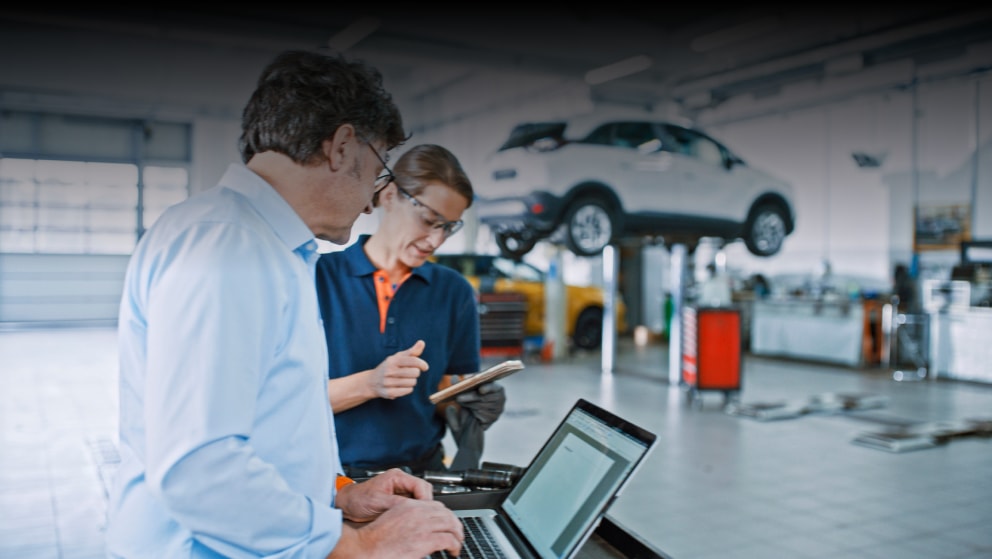
See how myKaarma works
Request a demo and see how myKaarma can connect AI call handling, service scheduling, and pre-visit intake
Subscribe for Updates
Get updates from the myKaarma team about service growth and fixed ops technology.
Recent
AI Readiness for Dealers and Fixed Ops
Oct 20, 2026
Building AI for Fixed Ops
Oct 14, 2026

Premium AI Experience for Premium Brands
Oct 10, 2026